.png)
Small Changes Beat Perfect Plans

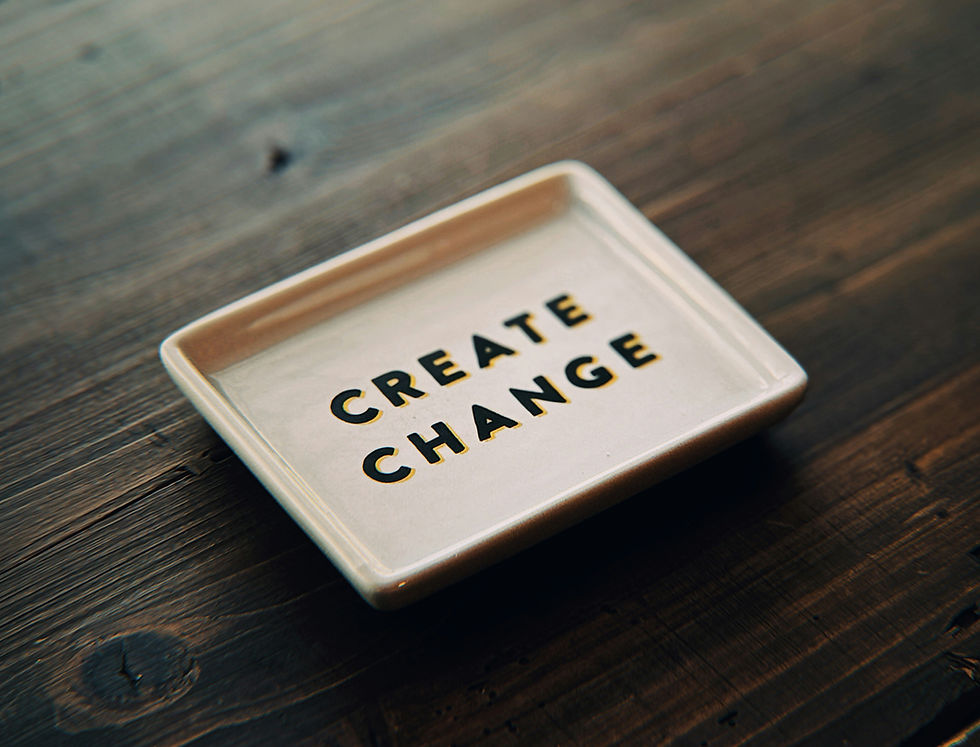
Have you ever promised yourself that this would be the week everything changed?
Maybe you planned to wake up an hour earlier, exercise every day, eat healthier, meditate, organize the house, spend more time with family, and finally catch up on everything you have been putting off. The plan felt exciting. For a few days, you were motivated. Then life happened.
A busy workday turned into a late evening. You missed one workout. The healthy meal became takeout. You stayed up later than you intended. Before long, you found yourself thinking, "I'll start again next Monday."
If this sounds familiar, you are far from alone.
Many of us have been taught to believe that meaningful change begins with a dramatic decision. We wait for the perfect plan, the perfect schedule, or the perfect amount of motivation, imagining that once we feel ready, change will naturally follow. Life rarely works that way.
The Myth of Motivation
Motivation is a wonderful thing when it shows up. It can give us energy, focus, and excitement. The problem is that motivation is unpredictable, rising and falling depending on our mood, our energy level, the weather, our sleep, and countless other factors.
If we only act when we feel motivated, we end up living according to circumstances rather than according to what matters most.
Think about brushing your teeth. Most mornings you probably do not wake up feeling inspired to brush your teeth. You do it because it has become part of your routine, and the action no longer depends on motivation.
Many of the habits that support our physical and emotional health develop the same way, becoming small, ordinary parts of daily life.
Why We Aim Too High
When people decide to make a change, they often focus on the finish line instead of the next step.
Someone who wants to become healthier may picture running five miles a day. Someone who wants to read more imagines finishing two books every week. Someone who wants less stress decides to meditate for thirty minutes every morning.
Those goals are not impossible. They are simply far away from where most people are starting.
Large goals often create large expectations, and large expectations make it easier to feel discouraged when life interrupts our plans. One missed day begins to feel like failure, and the irony is that our minds often respond by encouraging us to quit entirely.
"I already messed up."
"I'll try again next month."
"This just isn't who I am."
The Power of Tiny Actions
Imagine planting a tree. No one expects a seedling to provide shade on the first day. Growth happens slowly, almost invisibly, as the roots strengthen beneath the surface before anyone notices much change above the ground.
Healthy habits develop in much the same way.
Walking for ten minutes may not seem impressive. Reading three pages may not feel productive. Taking five slow breaths before a difficult conversation may not seem life changing.
Taken alone, these actions appear almost too small to matter. Repeated consistently, they begin to reshape the direction of a person's life, because small actions are powerful in large part because they are sustainable.
Progress Is Not Perfection
One of the most common barriers to change is perfectionism, which quietly tells us that if we cannot do something completely, there is little point in doing it at all.
If we cannot exercise for an hour, we skip exercise. If we cannot prepare a perfect dinner, we order fast food. If we miss one day of journaling, we stop writing altogether.
Notice how quickly our minds move from imperfect to impossible.
Real progress rarely looks perfect. Some weeks you may walk every day. Other weeks you may only walk twice, and those two walks still matter.
Imagine driving from Providence to Boston. If you encounter traffic, you probably do not turn the car around and drive home simply because the trip is taking longer than expected. You continue moving toward your destination.
Healthy change works the same way. A delay is not the same as giving up.
Grounding Change in What Matters
Part of what makes perfectionism so sticky comes down to how we talk to ourselves about our own progress. Words like failure and success are not neutral labels attached to events. They are relations we have learned to draw, and once a thought like "I already failed" shows up, it tends to pull a whole chain of related thoughts and feelings along with it, including the urge to quit.
The useful question is not whether that thought is accurate. It is whether following it moves you toward the life you want to build.
This is where a shift from goals to values becomes practical rather than abstract. Instead of asking, "How do I feel about my progress?" try asking, "What kind of person do I want to be in this moment?"
That question shifts our attention from emotions to values.
Perhaps you value being healthy. Perhaps you value being present with your family. Perhaps you value learning, kindness, or courage.
Values are different from goals. A goal can be completed. A value becomes a direction you continue traveling throughout your life. You never finish being a caring parent, you never complete being an honest friend, and you never graduate from living a healthy life. Each day simply offers another opportunity to move in that direction.
This way of working with values and difficult thoughts comes from contextual behavioral science, and specifically from relational frame theory, which studies how language shapes the way we relate to our own experience. Acceptance and Commitment Therapy, or ACT, is the practical, applied approach built on that foundation, and it is where the psychological flexibility skills described below come from.
Looking for the Next Helpful Step
Imagine standing at the base of a mountain. Looking at the summit can feel overwhelming. Looking at the next few feet of trail feels manageable.
Many people become discouraged because they spend too much time staring at the summit. Psychological flexibility asks us to return our attention to the next step, not the entire week or the entire year, just this next choice.
What is one thing you can do today that moves you slightly closer to the life you want?
It may be preparing tomorrow's lunch before bed. It may be putting on your walking shoes. It may be calling someone you have been meaning to reconnect with.
Small actions are easier to repeat because they require less negotiation with yourself.
Building Confidence
Confidence is often misunderstood. Many people believe confidence comes first and action follows. More often, the opposite is true.
We act. We learn. We adjust.
Confidence gradually grows from repeated experiences of showing up, even imperfectly, and each small success teaches us something important.
"I can do difficult things."
"I can recover after setbacks."
"I don't have to be perfect to make progress."
Those lessons become far more valuable than a temporary burst of motivation.
A Different Way to Measure Success
Imagine ending each day by asking yourself one question:
"Did I move a little closer to the life I want?"
The answer does not have to be dramatic. Perhaps you spent five uninterrupted minutes talking with your child. Perhaps you chose water instead of soda. Perhaps you stretched for ten minutes after work. Perhaps you paused before reacting during an argument.
These moments may seem ordinary. Over months and years, they become extraordinary.
A meaningful life is rarely built through grand gestures. It is built through thousands of small decisions that gradually become part of who we are.
Try This This Week
Choose one area of your life that matters to you. Instead of setting a large goal, choose one action that feels almost too easy.
For example:
Walk for ten minutes after dinner.
Read two pages before bed.
Drink one extra glass of water each day.
Spend five minutes outside.
Send one text to someone you care about.
Practice three slow breaths before opening your email in the morning.
Commit to doing that one action consistently for the next seven days.
If you do more, wonderful. If you only do that one small action, you are still building something valuable.
Reflection Questions
What change have I been postponing because I keep waiting for the perfect time?
Where does perfectionism tend to show up in my life?
What value do I want this habit to support?
What is one small action I could repeat tomorrow?
Lasting change is rarely loud. Most often, it begins quietly with one small decision, repeated often enough that it becomes part of the life you want to live.
Coming Next: Understanding Anxiety Without Fighting It explores why anxiety is not a sign that something is wrong with you and how learning to respond differently can loosen its grip.



Comments